

How do we ensure the transition to a net-zero metallurgical industry is as socially responsible as it is technologically advanced?
We were proud to have our partner Marco Ugolini from CA.RE. FOR. Engineering represent the EMPHATICaL Project at the recent EERA - European Energy Research Alliance workshop, focused on the non-technical challenges of CCUS deployment.
Marco’s presentation, "Assessing the social dimension of industrial CCUSSystems," dived into how we are integrating Social Life Cycle Assessment(S-LCA) into our broader performance evaluation framework of the EMPHATICaL system, alongside techno-economic and environmental assessments.
Key takeaways included:
- Integrating S-LCA into techno-economic and environmental assessment of the integrated CaL-CPU-eMeOH system: while CCU technologies enable deep decarbonisation, their systemic complexity can introduce additional social risks that must be proactively managed.
- Developing a preliminary S-LCA model aligned with UNEP/SETAC Guidelines, assessing and quantifying key risk areas such as labour rights, health & safety, and governance.
- Identifying early-stage social hotspots across the CCUS value chain through real-world industrial case studies.
- Addressing data gaps and methodological challenges in evaluating socio-economic impacts of large-scale CCUS deployment.
At EMPHATICaL, we aren't just building a First-of-a-Kind (FOAK) demonstrator to decarbonise the metallurgical industry and convert CO₂ into e-methanol; we are ensuring that its deployment is socially robust and inclusive of all stakeholders involved.
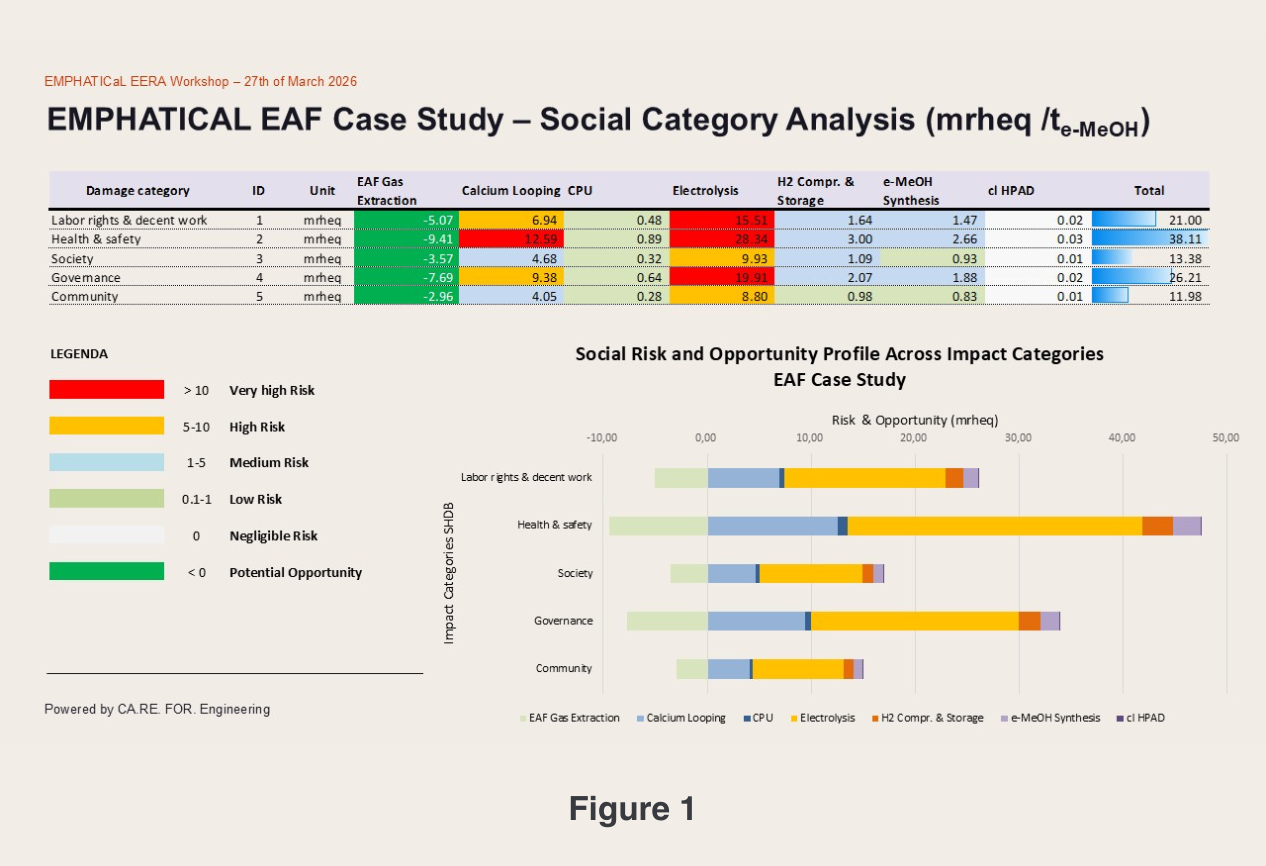
Figure 1- Example of Social Life Cycle Assessment (S-LCA) applied to the EMPHATICAL electric arc furnace (EAF) case study, expressed in medium risk hours equivalent (mrheq) per tonne of e-methanol.
The figure illustrates how social risks and opportunities are assessed and distributed across the main process stages and impact categories. Positive values represent potential social risks, while negative values indicate potential social opportunities (e.g. avoided burdens).
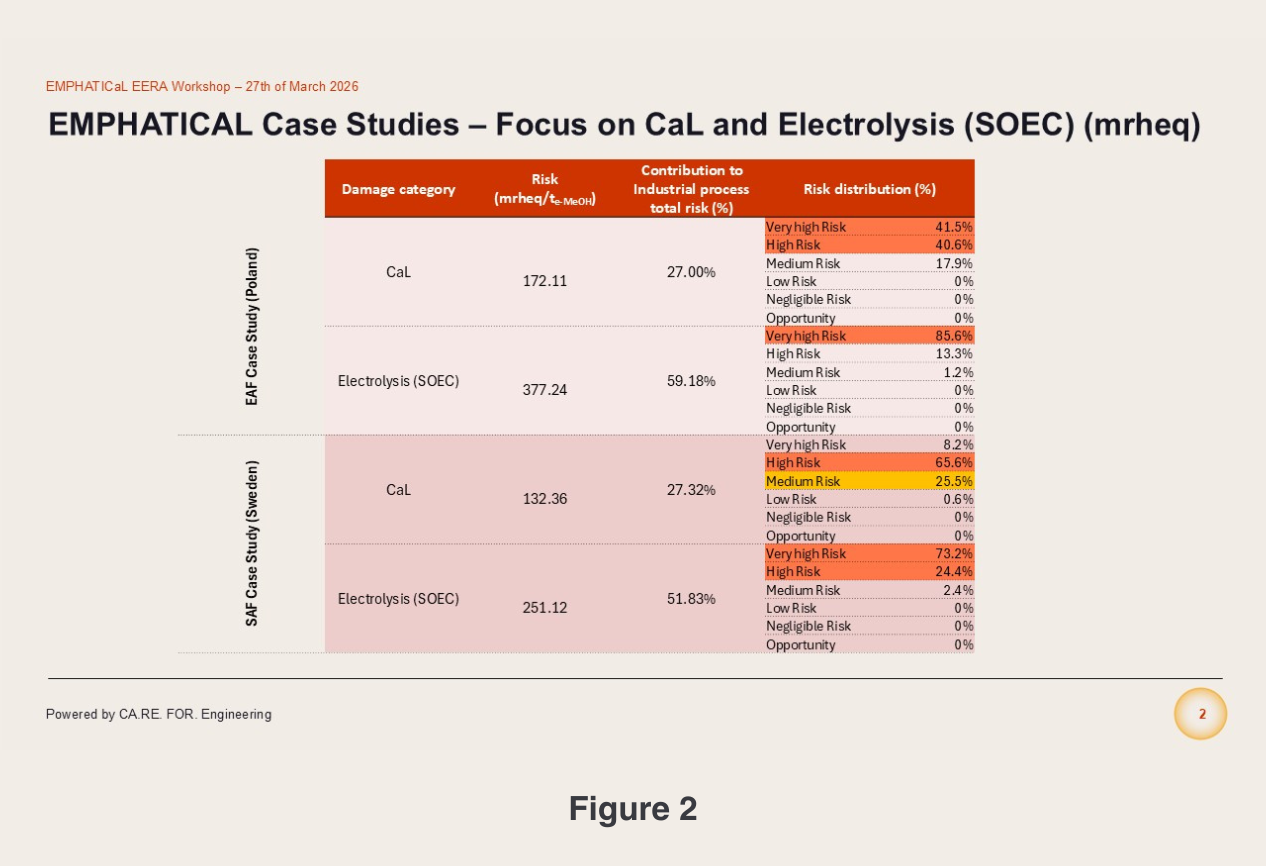
Figure 2 – Example of Social Life Cycle Assessment (S-LCA) hotspot analysis for the EMPHATICAL case studies, focusing on Calcium Looping (CaL) and electrolysis (SOEC), expressed in medium risk hours equivalent (mrheq) per tonne of e-methanol.
The figure compares the contribution of these key process units to the total social risk across two industrial contexts (electric arc furnace and submerged arc furnace), highlighting both their absolute risk levels (mrheq) and their relative contribution to the overall system.